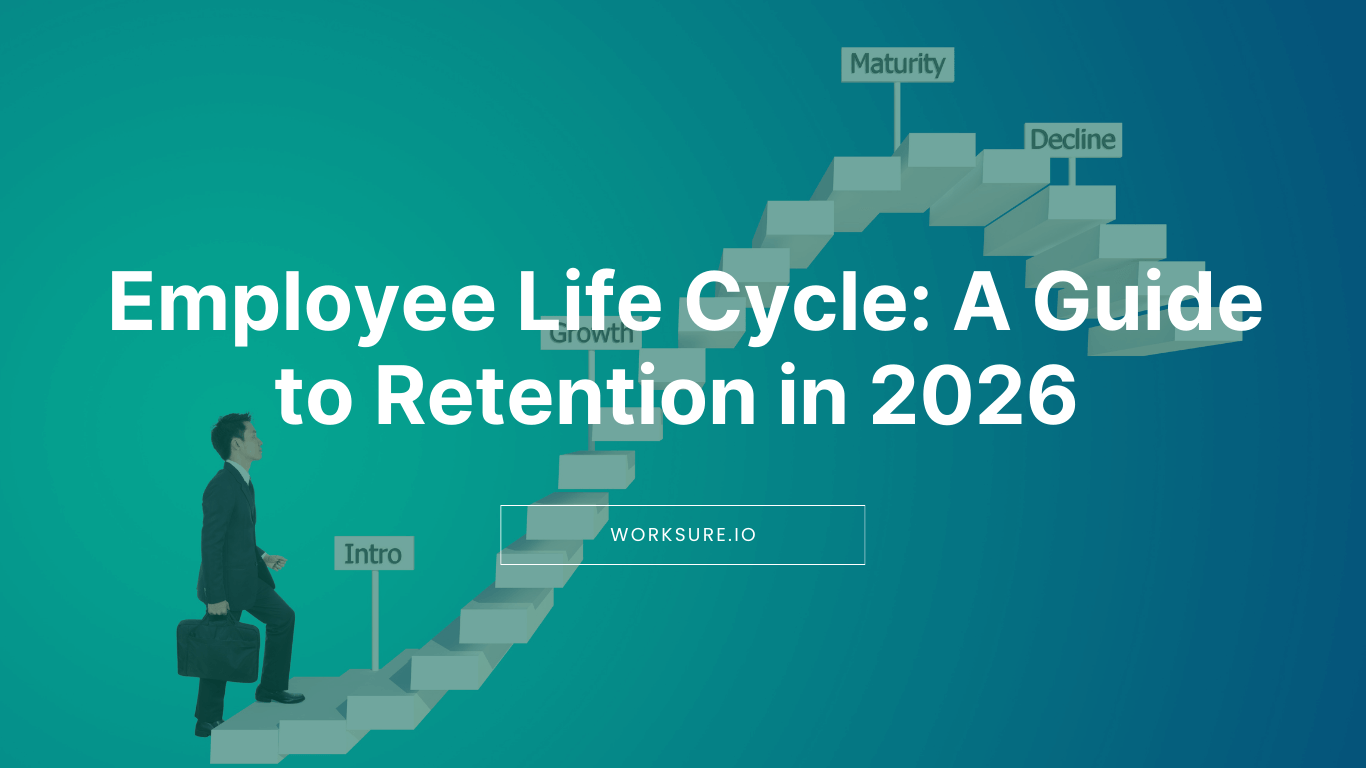
The employee life cycle is the path every worker follows inside a company — from the moment they see your job post to the day they leave. In 2026, this path matters more than ever. HR teams are under pressure to hire faster, keep good people, and build trust at every step.
A clear employee life cycle helps you do that. It shows you where people feel engaged, where they struggle, and where you may be losing strong talent. When this path works well, employees stay longer. When it breaks, turnover rises.
According to Gallup, companies with strong employee experience see up to 43% lower turnover. This is a major win for teams trying to reduce hiring costs and grow with stability.
WorkSure also supports this cycle by helping HR teams verify candidates, build trust, and create a smooth start for every employee.
What Is the Employee Life Cycle?
The employee life cycle is the step-by-step journey an employee takes inside a company. It starts with how you attract talent and ends when a worker leaves or becomes an alumni. Each stage helps HR teams improve hiring, growth, and retention. A clear cycle makes people stay longer and trust the company more.
The 6 Core Stages of the Employee Life Cycle
| Stage | What It Means |
| 1. Attraction | How people discover your company. |
| 2. Recruitment | How you hire and verify talent. |
| 3. Onboarding | How new hires adjust in the first 90 days. |
| 4. Development | How employees grow and learn. |
| 5. Retention | How you keep people engaged and satisfied. |
| 6. Separation | How an employee exits with respect. |
WorkSure supports this journey by helping HR teams hire with verified data, keep clean records, and build a transparent employee experience from day one.
Stage 1: Attraction — How You Bring Talent In
Attraction is the first step in the employee life cycle. It’s how people discover your company and decide if they want to learn more. In 2026, candidates look for trust, clarity, and a workplace that treats people well. This stage shapes their first impression before they ever apply.
What Shapes Talent Attraction in 2026
Candidates judge companies based on what they see and feel. According to LinkedIn’s research, 75% of candidates read company reviews before applying. Here are the top things they notice:
- Clear job roles they can understand
- Strong employer brand that shows real culture
- Fair pay and transparent hiring
- Good reviews on platforms like Glassdoor
- Verified hiring processes that show trust
- Simple application flow
When these areas are strong, more qualified candidates choose to apply.
Small Checklist for Better Attraction
Use this simple list to improve this stage:
| Attraction Step | What to Do |
| Job posting | Keep it clear and short |
| Career page | Show real people and real culture |
| Social media | Share wins, stories, and hiring updates |
| Reviews | Respond respectfully and improve issues |
| Brand message | Stay consistent everywhere |
Stage 2: Recruitment — Hiring With Trust
Recruitment is the stage where you choose the right people for the right roles. In 2026, hiring is fast, data-driven, and trust-focused. Candidates want clear steps. HR teams want fewer risks. A strong recruitment process helps both sides feel confident.
A good recruitment flow:
- Sets clear expectations
- Reduces bias
- Speeds up hiring
- Improves role fit
- Builds trust with candidates
Trust is the biggest factor. People stay longer when the hiring process feels fair and transparent.
Old Hiring vs. New Hiring in 2026
| Old Hiring | Hiring in 2026 |
| Long interviews | Short, structured interviews |
| Manual checks | Automated verification |
| Slow communication | Fast, clear updates |
| Vague job roles | Clear role expectations |
| Gut-based selection | Skill-based and data-based hiring |
Modern hiring focuses on speed, fairness, and clarity—all of which improve retention.
What a Strong Recruitment Process Includes
Use this simple list for building a solid 2026 hiring flow:
- Clear job requirements written in plain language
- Skill-focused screening instead of guesswork
- Verified employment history to avoid risks
- Transparent steps so candidates know what to expect
- Fast communication to keep candidates engaged
- Simple assessments linked to job needs
When these steps are done well, role fit improves—and so does retention.
2026 Hiring Trends to Watch
These trends shape how companies hire today:
- Trust-based hiring: people want proof, not promises
- AI screening tools that focus on skills
- Shorter hiring cycles because candidates move fast
- Higher need for verified data due to rising hiring fraud
- Demand for fair and bias-free processes
A strong recruitment stage helps HR meet these expectations.
Stage 3: Onboarding — First 90 Days Matter Most
Onboarding is the stage where new hires learn about their job, team, and company. The first 90 days shape how they feel about their workplace. A smooth start builds trust. A rough start pushes people to leave early. In 2026, employees expect clarity and support from day one.
Research from BambooHR shows that employees who go through good onboarding are 58% more likely to stay with the company long term.
What Strong Onboarding Includes
Here is a simple checklist HR teams can use:
- Clear role explanation
- Tools and access ready on day one
- Short training plan
- Welcome meeting with the team
- Simple tasks for the first week
- Check-ins during the first 30, 60, and 90 days
These steps help new hires learn fast without feeling lost.
A Simple 90-Day Onboarding Plan (2026)
| Time | What Should Happen |
| Day 1–7 | Welcome, tools ready, basic training |
| Week 2–4 | Small tasks, clear feedback |
| Month 2 | Skills training, deeper work |
| Month 3 | Role clarity, performance review |
This plan helps HR teams give new hires a safe and steady start.
Stage 4: Development — Growth Keeps People
Development is the stage where employees learn new skills and grow in their roles. In 2026, growth is one of the strongest reasons people stay. When employees see a path forward, they feel valued. When growth stops, turnover rises fast. A good development process:
- Builds confidence
- Improves job performance
- Reduces skill gaps
- Helps employees stay longer
- Makes teams stronger
People want to know they can grow, not stay stuck in one place. Use this checklist to build a strong development plan:
- Share clear goals
- Offer short monthly training sessions
- Give feedback often
- Help employees set skill targets
- Provide access to learning tools
- Reward improvement
A Simple Framework: Learn — Grow — Advance
| Step | What It Means | Example |
| Learn | Gain a skill | Training on a new tool |
| Grow | Apply the skill | Using the tool in daily tasks |
| Advance | Move forward | Taking bigger responsibilities |
How Development Improves Retention
When employees see growth, they stay. When they see no growth, they leave. A strong development stage:
- Builds trust
- Keeps people engaged
- Helps teams stay ready for future needs
- Creates a positive work culture
Stage 5: Retention — The Core of 2026 HR Strategy
Retention is the stage where you keep your best people. In 2026, employees want trust, fairness, and growth. When a company meets these needs, people stay. When it does not, turnover rises and hiring costs increase. A strong retention strategy protects the entire employee life cycle.
Employees stay when they feel supported. Here are the key drivers:
- Fair and clear policies
- Supportive managers
- Good work-life balance
- Growth opportunities
- Recognition for effort
- Safe and respectful work culture
- Transparent communication
These small, everyday actions make a big difference.
How Retention Connects to the Employee Life Cycle
Retention is shaped by earlier stages:
- If hiring is fair, people trust more.
- If onboarding is smooth, people settle faster.
- If development is clear, people grow with the company.
Stage 6: Separation — Exit With Respect
Separation is the final stage of the employee life cycle. It includes how an employee leaves the company, whether through resignation, end of contract, or retirement. A respectful exit protects your brand and helps you learn what needs improvement. In 2026, employees expect a fair and smooth offboarding process. Use this checklist for easy and clear offboarding:
- Clear communication about exit steps
- A simple handover process
- Return of company assets
- Access removal and security checks
- Final performance review
- Exit interview to collect insights
- Appreciation for the employee’s contribution
These steps help the process feel professional and fair.
2026 Trends in Offboarding
Modern companies focus on building long-term relationships, even after the employee leaves. Key trends include:
- Alumni networks for referrals and rehiring
- Short, structured exit interviews
- Clear knowledge transfer to protect workflow
- Positive final communication to maintain trust
- Data-based exit insights to reduce future turnover
Offboarding now shapes employer branding as much as hiring does.
Why the Employee Life Cycle is Important for Retention in 2026
Here are the key reasons how employee life cycle supports retention:

1. It Reduces Turnover
When employees get a good start, clear growth paths, and fair treatment, they stay longer. Harvard Business Review notes that poor onboarding alone causes up to 20% of new hires to leave in the first 45 days. A strong life cycle stops this early drop.
2. It Improves Employee Experience
Every stage shapes how an employee feels:
- How they were hired
- How they were trained
- How they grew
- How they were treated during tough times
When this experience is smooth, employees feel safe and valued.
3. It Builds Trust Through Transparency
Workers want honest communication in 2026. This includes clear job expectations, fair hiring, open feedback and simple HR processes. A strong life cycle gives teams a repeatable way to deliver that trust.
4. It Helps HR Predict Problems Early
A mapped employee journey helps HR spot issues before they become turnover. Examples:
- Low engagement during onboarding
- Skill gaps during development
- Misalignment in role expectations
Fixing these early protects retention.
How to Improve Retention in 2026 Using the Employee Life Cycle
Use these steps to strengthen every stage:
- Make job roles clear during attraction
- Use fair and verified hiring in recruitment
- Build a smooth and friendly onboarding plan
- Set small monthly growth goals for development
- Keep policies transparent for retention
- Treat every exit with respect during separation
These actions help employees feel safe and appreciated throughout their journey.
Retention Framework: Stage → Action → Result
| Employee Life Cycle Stage | Retention Action | Result |
| Attraction | Show real culture and clear job roles | Better applicant fit |
| Recruitment | Use skill-based hiring + verified data | Lower bad hires |
| Onboarding | Give clear tools, training, and support | Faster adjustment |
| Development | Offer simple growth paths | Stronger engagement |
| Retention | Keep policies fair and open | Higher trust |
| Separation | Use respectful offboarding | Better brand and referrals |
This framework keeps HR focused on actions that genuinely improve retention.
Small But Powerful Retention Tips for 2026
- Keep communication simple
- Share updates often
- Solve problems early
- Let employees give feedback easily
- Offer skills training that helps their role
- Recognize effort, not only big wins
Small habits build long-lasting loyalty.
How WorkSure Improves Retention Across the Life Cycle
WorkSure supports retention by strengthening the foundation of every stage:
- Attraction: Builds trust through verified hiring practices
- Recruitment: Reduces risks with fast and reliable employment verification
- Onboarding: Provides clean records that help HR start strong
- Development: Helps track employee history and role clarity
- Retention: Supports fairness through transparent data
A clear and trusted HR process leads to happier, long-term employees.
Final Takeaway
The employee life cycle gives HR a simple and clear way to understand what people need at every stage of their journey. When you improve the steps—attraction, recruitment, onboarding, development, retention, and separation—you build a workplace where employees feel supported, respected, and valued. In 2026, this is one of the strongest tools for keeping good talent.
A strong life cycle does more than reduce turnover. It builds trust. It creates a stable team. And it helps companies grow without the constant stress of rehiring.
If you want to build a fair, transparent, and trusted hiring and HR process, WorkSure can help. It verifies employment records, improves onboarding, supports clean data, and creates a smoother experience for both HR teams and employees.
A better employee life cycle starts with better clarity and trust— and WorkSure gives you both.
Related Articles:
The Hidden Cost of Unverified Employment Histories
5 Metrics Every HR Should Track to Measure Hiring Quality
Frequently Asked Questions (FAQs)
What are the 6 stages of the employee life cycle?
The six stages are: Attraction, Recruitment, Onboarding, Development, Retention, and Separation. These stages follow the full journey of an employee inside the company.
How does the employee life cycle help with retention?
It helps HR see what employees need at each stage. When hiring is fair, onboarding is smooth, and growth is clear, people stay longer and trust the company more.
What is the most important stage in the employee life cycle?
All stages matter, but onboarding often has the biggest impact. A good first 90 days helps new hires feel confident, supported, and ready to stay long term.
How can HR improve the employee life cycle in 2026?
HR can keep steps simple, use verified hiring, give clear training, share feedback often, and support respectful exits. Small improvements in each stage can raise retention.
What tools help manage the employee life cycle?
HR teams use tools for hiring, verification, onboarding, and employee data. WorkSure helps manage clean records, trusted hiring, and smooth HR processes across all stages.